Published 2026 | Design Trends, AI in Interior Design
Type “living room design” into an AI tool today, and in seconds you’ll have a photorealistic render — moodboard, colour palette, furniture layout, all done before your coffee gets cold.
It’s impressive. It’s fast. And it’s got a lot of people asking the same question:
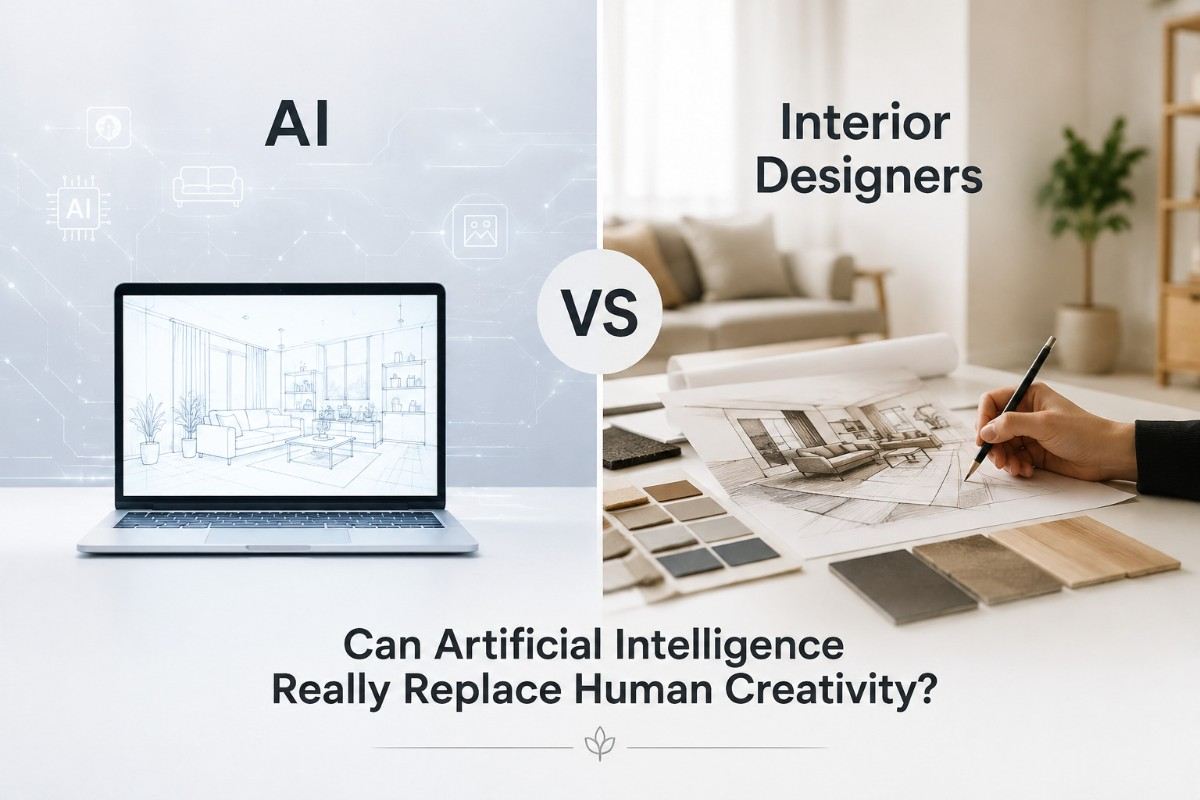
Is AI about to replace interior designers?
Short answer: not even close. Long answer: keep reading.
There’s no denying it — AI interior design tools have exploded in popularity. From AI room visualization apps to AI-powered home design software, homeowners now have access to instant concepts, colour suggestions, and layout ideas that used to take designers days to put together.
For a lot of people, that feels like magic. And in some ways, it is.
AI can:
It’s fast, it’s fun, and it’s an incredible starting point.
But a pretty picture isn’t a finished project.
Here’s what AI doesn’t do: it doesn’t walk into your home. It doesn’t take real measurements, check the light at 4pm in winter, or notice that the “perfect” sofa in the render won’t actually fit through your front door.
Interior design isn’t just about how a room looks on a screen — it’s about how a room works in real life. A real project means understanding:
AI doesn’t visit the site. It doesn’t coordinate with contractors, solve a plumbing surprise mid-renovation, or make a judgment call when reality doesn’t match the render. That’s not a small gap — it’s the entire difference between generating an image and delivering a livable space.
This is where interior designers bring something no algorithm can replicate: human understanding and real-world experience.
Maybe it’s time to stop framing this as “AI vs interior designers” altogether.
Because the real story unfolding right now isn’t a rivalry — it’s a partnership.
Used well, AI interior design tools act as a creative accelerant. They compress hours of concept work into minutes, letting designers explore more ideas, faster, without losing momentum. It’s less about replacing the designer and more about giving them a serious creative shortcut.
But it’s still the designer who takes those raw, AI-generated ideas and turns them into something:
That’s the part AI can’t do — yet, and maybe not ever.
In a world increasingly flooded with AI-generated everything, the human hand — the eye for detail, the intuition, the ability to walk into a half-finished room and just know what it needs — might just become the most valuable design feature of all.
So no, AI isn’t replacing interior designers. It’s just handing them a faster pencil.
Looking to bring your space to life? AI can spark the idea — but it takes a real designer to make it real.

Creating thoughtful interiors where creativity, functionality, and personal style come together to transform spaces into places you love.